Loving God and loving His Word are not two different things. Scripture ties them together from Moses to Jesus, and you can’t keep one while throwing out the other.
I recently came across an argument that’s been getting shared around: “Christian nationalists have a mouth full of scripture, and Jesus didn’t tell us to love our scriptures.” The idea is that Christians should just be known by how they love their neighbor, and that quoting the Bible is somehow a sign you’ve missed the point.
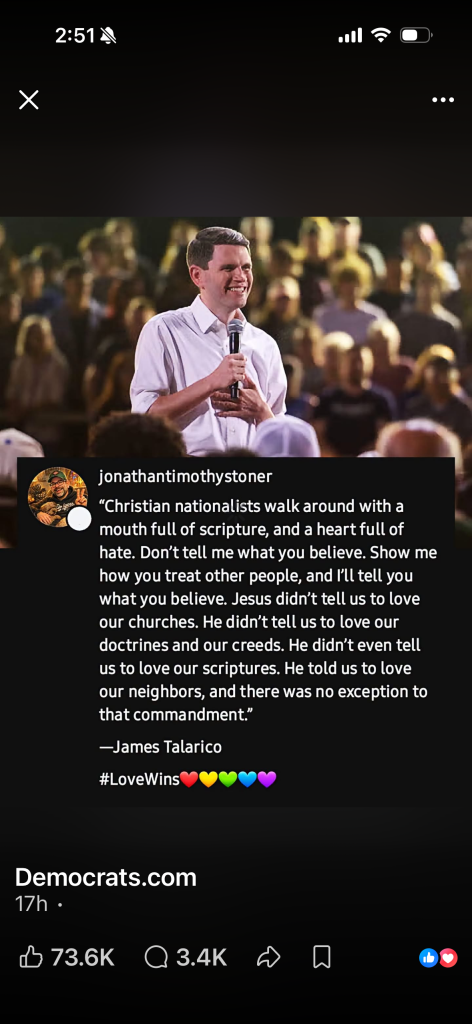
It sounds good at first. It even sounds humble. But when you hold it up against what the Bible actually says, and what Jesus Himself said and did, it falls apart. Let’s walk through it.
Where the Argument Gets Something Right
People misquoting and misusing scripture is nothing new. They pull a verse out of context to win an argument, push a political agenda, or justify their own worldview.
Jesus called it out too. He rebuked the religious leaders of His day who knew the Scriptures inside and out but missed the point entirely: “You search the Scriptures, for in them you think you have eternal life; and these are they which testify of Me. But you are not willing to come to Me that you may have life” (John 5:39–40). Paul wrote that even if he understood all mysteries and all knowledge but had no love, he was nothing (1 Corinthians 13:2).
So yes, knowing verses without love is empty. But notice what Jesus didn’t say. He didn’t tell them to stop reading Scripture. He told them the Scriptures point to Him, and they should follow where those Scriptures lead.
The answer to Scripture taken out of context is Scripture in context, not less Scripture.
The Greatest Commandment Comes With His Words Attached
When a lawyer asked Jesus which commandment was the greatest, Jesus answered: “You shall love the LORD your God with all your heart, with all your soul, and with all your mind.” Then He gave the second: “You shall love your neighbor as yourself” (Matthew 22:37–39).
Jesus wasn’t coming up with something new. He was quoting Deuteronomy 6:5, a passage every Jewish listener knew by heart. And if you keep reading that passage, the very next verse says:
“And these words which I command you today shall be in your heart. You shall teach them diligently to your children, and shall talk of them when you sit in your house, when you walk by the way, when you lie down, and when you rise up.” (Deuteronomy 6:6–7)
Loving God and keeping His words in your heart come in the same breath. You can’t quote the first half of that passage and throw out the second.
The second commandment is in Scripture too. “Love your neighbor as yourself” comes straight from Leviticus 19:18. So the person arguing that we should love our neighbor instead of loving Scripture is quoting Scripture to make the case. You can’t use God’s Word to argue that God’s Word doesn’t matter.
Jesus finished His answer by saying, “On these two commandments hang all the Law and the Prophets” (Matthew 22:40). The two greatest commandments sum up Scripture. They don’t replace it.
A Mouth Full of Scripture Is a Command, Not a Problem
The criticism that Christians have “a mouth full of scripture” is interesting, because that’s almost exactly what God told Joshua to have:
“This Book of the Law shall not depart from your mouth, but you shall meditate in it day and night, that you may observe to do according to all that is written in it.” (Joshua 1:8)
Notice the order. God’s Word stays in your mouth, you meditate on it, and then you do what it says. Speaking the Word and living the Word aren’t opposites. One leads to the other.
The same theme runs through the whole Bible:
- The psalmist hid God’s Word in his heart so he wouldn’t sin against Him (Psalm 119:11).
- Paul told the church to let the word of Christ dwell in them richly, teaching and admonishing one another (Colossians 3:16).
- Peter told believers to always be ready to give a defense for the hope that is in them, with meekness and fear (1 Peter 3:15).
- Paul called God’s Word “the sword of the Spirit” (Ephesians 6:17).
Peter’s words matter here. We’re called to be ready with an answer and to give it with gentleness. That’s the balance: a mouth full of Scripture, spoken with love.
Yes, Scripture Talks About Loving God’s Word
The claim that we were never told to love the Scriptures doesn’t hold up either. The Bible talks about loving God’s Word over and over:
- “Oh, how I love Your law! It is my meditation all the day.” (Psalm 119:97)
- “And I will delight myself in Your commandments, which I love.” (Psalm 119:47)
- “Great peace have those who love Your law, and nothing causes them to stumble.” (Psalm 119:165)
- The blessed man’s “delight is in the law of the LORD, and in His law he meditates day and night.” (Psalm 1:2)
- Job treasured the words of God’s mouth “more than my necessary food.” (Job 23:12)
- Jeremiah said God’s words were “the joy and rejoicing of my heart.” (Jeremiah 15:16)
The New Testament says the same thing in a sobering way. Paul wrote that people perish “because they did not receive the love of the truth” (2 Thessalonians 2:10). And Jesus, praying to the Father, said plainly: “Your word is truth” (John 17:17).
Put those together. We’re warned about refusing to love the truth, and Jesus tells us God’s Word is the truth.
Jesus Had a Mouth Full of Scripture
If having a mouth full of Scripture is a problem, then Jesus had that problem.
When Satan tempted Him in the wilderness, Jesus answered every temptation the same way: “It is written.” Three times, He responded with Scripture (Matthew 4:1–11). His first answer was, “Man shall not live by bread alone, but by every word that proceeds from the mouth of God” (Matthew 4:4).
There’s something else worth noticing in that passage. Satan quoted Scripture too. He took Psalm 91 out of context and tried to use it against Jesus (Matthew 4:6). This isn’t new. Twisting God’s Word goes all the way back to the garden, when the serpent asked Eve, “Has God indeed said…?” (Genesis 3:1).
Jesus didn’t respond to twisted Scripture by setting Scripture aside. He answered it with Scripture rightly understood.
Throughout His ministry, Jesus treated the Scriptures as the authority:
- He said not one jot or tittle would pass from the law until all is fulfilled (Matthew 5:18).
- He told the Sadducees, “You are mistaken, not knowing the Scriptures nor the power of God” (Matthew 22:29).
- After His resurrection, He walked with two disciples and, “beginning at Moses and all the Prophets,” explained what the Scriptures said about Himself (Luke 24:27).
- He said, “Heaven and earth will pass away, but My words will by no means pass away” (Matthew 24:35).
- He said, “The words that I speak to you are spirit, and they are life” (John 6:63).
When many followers walked away, Peter answered for the rest: “Lord, to whom shall we go? You have the words of eternal life” (John 6:68).
If You Love Jesus, You Keep His Word
Jesus connected loving Him directly to keeping His words. He said it more than once:
- “If you love Me, keep My commandments.” (John 14:15)
- “If anyone loves Me, he will keep My word; and My Father will love him, and We will come to him and make Our home with him.” (John 14:23)
- “If you abide in My word, you are My disciples indeed. And you shall know the truth, and the truth shall make you free.” (John 8:31–32)
- “If you abide in Me, and My words abide in you, you will ask what you desire, and it shall be done for you.” (John 15:7)
- “More than that, blessed are those who hear the word of God and keep it!” (Luke 11:28)
John makes the connection even clearer in his letters: “Whoever keeps His word, truly the love of God is perfected in him” (1 John 2:5). And again: “For this is the love of God, that we keep His commandments. And His commandments are not burdensome” (1 John 5:3).
You can’t keep words you don’t know. You can’t abide in a Word you’ve set aside. According to Jesus, loving His Word isn’t a distraction from loving Him. It’s how we love Him.
The night before the cross, Jesus prayed this over His disciples: “I have given them Your word; and the world has hated them… Sanctify them by Your truth. Your word is truth” (John 17:14–17). The Word is what sets His people apart.
The Word Is Not Separate From God
The deepest problem with the argument is that it treats God’s Word as something apart from God. Scripture doesn’t allow that.
John’s Gospel opens this way: “In the beginning was the Word, and the Word was with God, and the Word was God” (John 1:1). A few verses later: “And the Word became flesh and dwelt among us” (John 1:14). When Jesus returns, “His name is called The Word of God” (Revelation 19:13).
The written Word and the living Word aren’t the same thing, but they can’t be pulled apart. The Scriptures testify of Christ (John 5:39), and Christ is the Word made flesh. To set aside the Word that reveals Him is to set aside the clearest picture we have of Him.
The Psalmist put it this way: “You have magnified Your word above all Your name” (Psalm 138:2). God takes His Word seriously. So should we.
And this Word isn’t a dead letter. “The word of God is living and powerful, and sharper than any two-edged sword” (Hebrews 4:12). It’s how faith comes in the first place: “Faith comes by hearing, and hearing by the word of God” (Romans 10:17).
The Word Is What Teaches Us to Love
The argument sets up a choice: either you love Scripture, or you love your neighbor. But the Bible never makes us choose. The Word is where we learn how to love in the first place.
Paul wrote that “all Scripture is given by inspiration of God” so that “the man of God may be complete, thoroughly equipped for every good work” (2 Timothy 3:16–17). The good works people want to see from Christians, like feeding the hungry, caring for the widow, forgiving enemies, are things we learn from Scripture.
At the same time, the Word itself tells us not to stop at hearing it:
- “But be doers of the word, and not hearers only, deceiving yourselves.” (James 1:22)
- “My little children, let us not love in word or in tongue, but in deed and in truth.” (1 John 3:18)
- “By this all will know that you are My disciples, if you have love for one another.” (John 13:35)
So the person making this argument isn’t wrong that Christians should be known by their love. Jesus said so. Where the argument goes wrong is in treating that as a reason to put the Word down. Every one of those calls to love comes from the Word.
This isn’t either/or. It’s both/and. We study the Word, we keep it in our hearts and on our lips, and we live it out toward the people around us. As John put it, “We love Him because He first loved us” (1 John 4:19), and we only know how He loved us because His Word tells us.
Conclusion
The claim that Jesus never told us to love the Scriptures isn’t something Jesus taught, and it isn’t supported by the Bible.
Jesus quoted Scripture when He was tempted, taught from it throughout His ministry, explained it after His resurrection, and said that whoever loves Him will keep His word. The greatest commandment He gave comes from a passage that tells us to keep God’s words in our hearts, teach them to our children, and talk about them all day long.
If you’re not a Christian I would argue that we need to be honest, say what you believe and why rather than to taking half a verse from the Bible, insert you’re own meaning, and then use that as a weapon against Christians.
And to my fellow believers: let’s keep a mouth full of Scripture. Let’s also make sure our lives match it. Be ready with an answer, give it with gentleness and respect, and let people see the Word in how we love them.
“Your word is a lamp to my feet and a light to my path.” (Psalm 119:105)
Scripture References (NKJV)
The Greatest Commandment
Matthew 22:37–40 — Jesus said to him, “‘You shall love the LORD your God with all your heart, with all your soul, and with all your mind.’ This is the first and great commandment. And the second is like it: ‘You shall love your neighbor as yourself.’ On these two commandments hang all the Law and the Prophets.”
Deuteronomy 6:5–7 — “You shall love the LORD your God with all your heart, with all your soul, and with all your strength. And these words which I command you today shall be in your heart. You shall teach them diligently to your children, and shall talk of them when you sit in your house, when you walk by the way, when you lie down, and when you rise up.”
Leviticus 19:18 — “You shall not take vengeance, nor bear any grudge against the children of your people, but you shall love your neighbor as yourself: I am the LORD.”
Scripture Without Love
John 5:39–40 — “You search the Scriptures, for in them you think you have eternal life; and these are they which testify of Me. But you are not willing to come to Me that you may have life.”
1 Corinthians 13:2 — And though I have the gift of prophecy, and understand all mysteries and all knowledge, and though I have all faith, so that I could remove mountains, but have not love, I am nothing.
A Mouth Full of Scripture
Joshua 1:8 — “This Book of the Law shall not depart from your mouth, but you shall meditate in it day and night, that you may observe to do according to all that is written in it. For then you will make your way prosperous, and then you will have good success.”
Psalm 119:11 — Your word I have hidden in my heart, that I might not sin against You.
Colossians 3:16 — Let the word of Christ dwell in you richly in all wisdom, teaching and admonishing one another in psalms and hymns and spiritual songs, singing with grace in your hearts to the Lord.
1 Peter 3:15 — But sanctify the Lord God in your hearts, and always be ready to give a defense to everyone who asks you a reason for the hope that is in you, with meekness and fear.
Ephesians 6:17 — And take the helmet of salvation, and the sword of the Spirit, which is the word of God.
Loving God’s Word
Psalm 119:97 — Oh, how I love Your law! It is my meditation all the day.
Psalm 119:47 — And I will delight myself in Your commandments, which I love.
Psalm 119:165 — Great peace have those who love Your law, and nothing causes them to stumble.
Psalm 1:2 — But his delight is in the law of the LORD, and in His law he meditates day and night.
Job 23:12 — I have not departed from the commandment of His lips; I have treasured the words of His mouth more than my necessary food.
Jeremiah 15:16 — Your words were found, and I ate them, and Your word was to me the joy and rejoicing of my heart; for I am called by Your name, O LORD God of hosts.
2 Thessalonians 2:10 — And with all unrighteous deception among those who perish, because they did not receive the love of the truth, that they might be saved.
John 17:14–17 — “I have given them Your word; and the world has hated them because they are not of the world, just as I am not of the world. I do not pray that You should take them out of the world, but that You should keep them from the evil one. They are not of the world, just as I am not of the world. Sanctify them by Your truth. Your word is truth.”
Jesus and the Scriptures
Matthew 4:4 — But He answered and said, “It is written, ‘Man shall not live by bread alone, but by every word that proceeds from the mouth of God.'”
Matthew 4:6 — And said to Him, “If You are the Son of God, throw Yourself down. For it is written: ‘He shall give His angels charge over you,’ and, ‘In their hands they shall bear you up, lest you dash your foot against a stone.'”
Genesis 3:1 — Now the serpent was more cunning than any beast of the field which the LORD God had made. And he said to the woman, “Has God indeed said, ‘You shall not eat of every tree of the garden’?”
Matthew 5:18 — “For assuredly, I say to you, till heaven and earth pass away, one jot or one tittle will by no means pass from the law till all is fulfilled.”
Matthew 22:29 — Jesus answered and said to them, “You are mistaken, not knowing the Scriptures nor the power of God.”
Luke 24:27 — And beginning at Moses and all the Prophets, He expounded to them in all the Scriptures the things concerning Himself.
Matthew 24:35 — “Heaven and earth will pass away, but My words will by no means pass away.”
John 6:63 — “It is the Spirit who gives life; the flesh profits nothing. The words that I speak to you are spirit, and they are life.”
John 6:68 — But Simon Peter answered Him, “Lord, to whom shall we go? You have the words of eternal life.”
Loving Jesus and Keeping His Word
John 14:15 — “If you love Me, keep My commandments.”
John 14:23 — Jesus answered and said to him, “If anyone loves Me, he will keep My word; and My Father will love him, and We will come to him and make Our home with him.”
John 8:31–32 — Then Jesus said to those Jews who believed Him, “If you abide in My word, you are My disciples indeed. And you shall know the truth, and the truth shall make you free.”
John 15:7 — “If you abide in Me, and My words abide in you, you will ask what you desire, and it shall be done for you.”
Luke 11:28 — But He said, “More than that, blessed are those who hear the word of God and keep it!”
1 John 2:5 — But whoever keeps His word, truly the love of God is perfected in him. By this we know that we are in Him.
1 John 5:3 — For this is the love of God, that we keep His commandments. And His commandments are not burdensome.
The Word Is God
John 1:1 — In the beginning was the Word, and the Word was with God, and the Word was God.
John 1:14 — And the Word became flesh and dwelt among us, and we beheld His glory, the glory as of the only begotten of the Father, full of grace and truth.
Revelation 19:13 — He was clothed with a robe dipped in blood, and His name is called The Word of God.
Psalm 138:2 — I will worship toward Your holy temple, and praise Your name for Your lovingkindness and Your truth; for You have magnified Your word above all Your name.
Hebrews 4:12 — For the word of God is living and powerful, and sharper than any two-edged sword, piercing even to the division of soul and spirit, and of joints and marrow, and is a discerner of the thoughts and intents of the heart.
Romans 10:17 — So then faith comes by hearing, and hearing by the word of God.
The Word Teaches Us to Love
2 Timothy 3:16–17 — All Scripture is given by inspiration of God, and is profitable for doctrine, for reproof, for correction, for instruction in righteousness, that the man of God may be complete, thoroughly equipped for every good work.
James 1:22 — But be doers of the word, and not hearers only, deceiving yourselves.
1 John 3:18 — My little children, let us not love in word or in tongue, but in deed and in truth.
John 13:35 — “By this all will know that you are My disciples, if you have love for one another.”
1 John 4:19 — We love Him because He first loved us.
Psalm 119:105 — Your word is a lamp to my feet and a light to my path.